Electric golf carts are no longer limited to quiet fairways. They now serve resorts, campuses, warehouses, farms, and private communities. Their production combines battery engineering, vehicle design, safety testing, and careful human assembly.
So, how are electric golf carts manufactured? The answer begins with a design brief. Engineers define range, payload, terrain performance, charging time, and passenger capacity. They then select the frame, suspension, motor, controller, battery system, and braking components. Tom Reilly, an electric mobility manufacturing consultant, explains, “A reliable cart begins with disciplined assembly, not flashy specifications.”
That principle appears on the factory floor. Steel or aluminum frames are cut, welded, coated, and inspected. Workers install wiring harnesses before fitting the motor and controller. Battery packs require careful placement, secure connections, and protection from vibration. A loose terminal can create heat, noise, or an expensive service problem.
Body panels may be molded from durable plastic or formed from metal. Seats, steering systems, dashboards, lights, and windshields are added during later assembly stages. Each completed cart undergoes checks for acceleration, braking, steering response, battery charging, and unusual movement.
The process sounds orderly. It is not always perfect. Supplier delays, software faults, and small alignment errors can slow production. Strong manufacturers learn from these failures instead of hiding them.
This guide examines the top 10 electric golf cart manufacturers and compares how their factories build dependable vehicles. Their methods differ, but quality still depends on testing, traceability, skilled technicians, and honest performance claims.
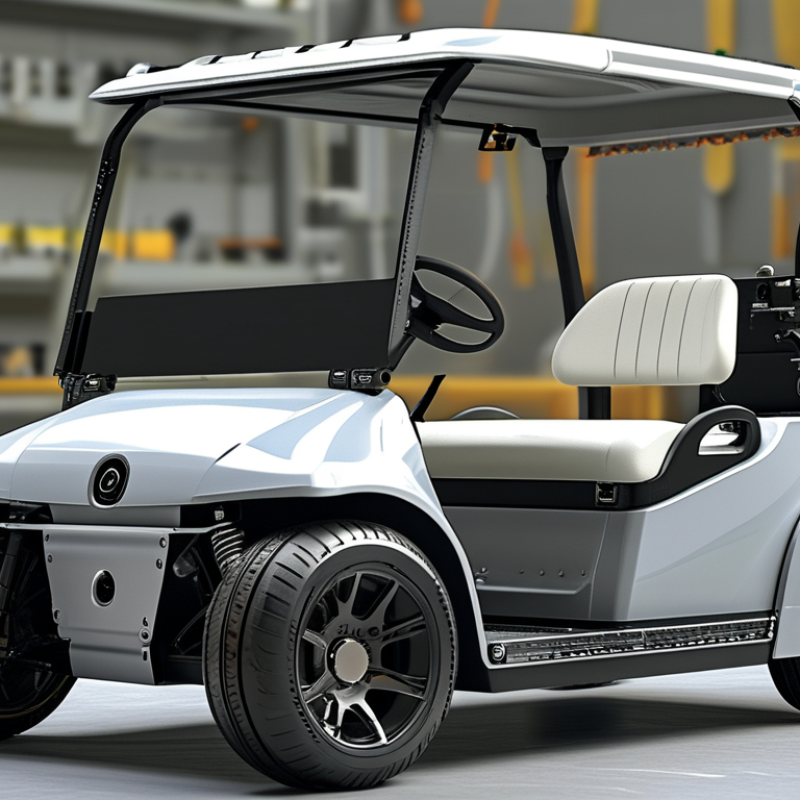
What Defines an Electric Golf Cart
An electric golf cart is more than a small vehicle with a battery. It combines low-speed mobility, controlled torque, simple maintenance, and quiet operation. The U.S. Department of Energy defines low-speed vehicles as vehicles reaching 20–25 mph, while many golf carts operate below that range. This distinction matters. A cart built for a flat course may struggle on wet grass or steep paths.
Industry data also shows growing demand. Grand View Research estimated the global golf cart market at about USD 1.66 billion in 2023, with continued growth expected through 2030. That growth reflects more than golf. Resorts, campuses, warehouses, and residential communities increasingly need compact electric transport. Still, the definition remains somewhat fuzzy. I would not judge quality by speed alone.
Manufacturing begins with a steel or aluminum frame, suspension, brakes, and an electric drive system. Engineers match motor torque to passenger load, incline, and tire size. Battery choices usually include lead-acid or lithium-based packs. Lithium batteries reduce weight, but they require precise battery-management systems and controlled charging. Factory testing checks braking distance, steering response, charger temperature, and range under load. One overlooked detail is comfort. A quiet motor cannot fix poor seating or harsh suspension. Reported range can also disappoint when measured on smooth, level ground rather than uneven terrain.
How Electric Golf Carts Are Designed and Engineered
Electric golf carts begin with a clear engineering purpose: quiet movement, low maintenance, and stable handling. Designers measure passenger load, terrain, speed, and expected driving hours before choosing the battery system. A typical layout places batteries low in the frame. This reduces the center of gravity and improves cornering.
The chassis usually combines steel or aluminum members with protective coatings. Engineers test suspension travel, steering response, braking distance, and frame fatigue. Motor controllers must deliver smooth torque on hills without wasting energy. Battery enclosures need ventilation, secure mounting, and protection from water and road debris. Wiring is routed carefully to reduce heat and vibration damage. In practical testing, small issues appear. A seat may flex more than expected. A connector may loosen after repeated shocks. Good engineering records these failures and corrects them before production.
Tips: Check the cart’s rated payload, battery chemistry, charger compatibility, and ground clearance. Ask for test data, not only attractive specifications. Inspect welds, cable protection, tire wear, and brake adjustment. A useful design should feel predictable, not merely powerful. Avoid assuming that a larger motor solves every problem; it can increase weight, heat, and energy use.
Step-by-Step Process for Manufacturing Electric Golf Carts
Top 10 Electric Golf Cart Manufacturers and How They Are Made
Step-by-Step Process for Manufacturing Electric Golf Carts
Electric golf cart production begins with design targets, not shiny body panels. Engineers define payload, range, ground clearance, and braking distance. The 2024 Global EV Outlook reported nearly 14 million electric car sales in 2023. This growth supports wider battery and motor research, although golf carts require different performance priorities. A small frame still needs careful load testing.
The process starts with cutting and welding the steel or aluminum chassis. Technicians check each joint for alignment before applying corrosion protection. Suspension mounts, steering parts, and brake components are then installed. The battery tray receives special attention because vibration can loosen connections. BloombergNEF’s 2024 Battery Price Survey placed the average lithium-ion pack price at 115 dollars per kilowatt-hour. Golf cart packs may cost more per usable kilowatt-hour because their volumes are smaller.
The motor, controller, charger, and wiring harness follow. Workers route cables through protective sleeves and inspect every terminal by hand. The body panels are molded, trimmed, painted, and fitted to the frame. Seats, lights, instruments, and safety restraints complete the assembly. Testing includes uphill driving, braking, water exposure, charging, and repeated acceleration. It is not perfectly linear. A loose connector can send the cart back several stations. Battery management software is calibrated next, but calibration errors still happen. A final audit measures speed, noise, current draw, and charger response. The International Organization for Standardization’s ISO 9001 framework emphasizes documented processes and traceability, which helps factories locate recurring defects. A clean production chart looks simple. Factory work is less tidy.
Top 10 Electric Golf Cart Manufacturers and How They Are Made - Step-by-Step Process for Manufacturing Electric Golf Carts
Comparative industry profiles and the standard manufacturing workflow for electric golf carts
| Profile |
Typical Product Focus |
System Voltage |
Battery Options |
Motor Output |
Typical Speed |
Estimated Range |
Main Manufacturing Strength |
Key Manufacturing Steps |
| 01 |
Neighborhood transportation carts |
48 V |
Lead-acid or LFP |
3–6 kW |
25–32 km/h |
50–90 km |
High-volume frame and body assembly |
Design validation → tube cutting → frame welding → corrosion protection → body molding → drivetrain installation → testing |
| 02 |
Golf-course passenger carts |
36–48 V |
Flooded or AGM lead-acid |
2.5–5 kW |
19–28 km/h |
40–75 km |
Quiet operation and low-speed control |
Chassis inspection → suspension fitting → motor mounting → controller wiring → seat installation → brake testing → final inspection |
| 03 |
Utility and maintenance carts |
48–72 V |
Deep-cycle lead-acid or LFP |
5–10 kW |
25–40 km/h |
45–100 km |
Payload capacity and reinforced structures |
Load analysis → reinforced frame welding → cargo-bed fabrication → axle installation → powertrain calibration → payload and hill testing |
| 04 |
Lithium-powered premium carts |
48 V |
Lithium iron phosphate |
4–8 kW |
25–40 km/h |
70–120 km |
Battery integration and electronic monitoring |
Cell inspection → battery-pack assembly → BMS installation → enclosure sealing → CAN communication check → charging and thermal testing |
| 05 |
Street-legal low-speed vehicles |
48–72 V |
LFP or AGM |
5–15 kW |
32–45 km/h |
60–120 km |
Safety equipment and compliance preparation |
Regulatory design review → lighting installation → seat-belt fitting → windshield assembly → electrical safety checks → road simulation testing |
| 06 |
Multi-row shuttle carts |
48–72 V |
Lead-acid or LFP |
6–12 kW |
25–35 km/h |
50–100 km |
Passenger capacity and structural rigidity |
Platform design → extended-frame welding → roof assembly → seating installation → weight distribution check → braking and turning tests |
| 07 |
Off-road and all-terrain carts |
48–72 V |
LFP or deep-cycle lead-acid |
8–15 kW |
30–45 km/h |
45–90 km |
Ground clearance, torque, and suspension durability |
Suspension engineering → differential installation → tire fitting → underbody protection → torque calibration → slope and rough-terrain testing |
| 08 |
Fleet and rental carts |
36–48 V |
AGM or flooded lead-acid |
2.5–6 kW |
19–32 km/h |
40–80 km |
Simplified service access and standardized parts |
Modular design → standardized subassemblies → harness routing → service-panel installation → endurance cycling → maintenance inspection |
| 09 |
Custom commercial carts |
48–72 V |
LFP, AGM, or lead-acid |
5–12 kW |
25–40 km/h |
50–110 km |
Application-specific bodies and accessories |
Customer specification → 3D design → prototype build → fit and clearance review → low-volume assembly → acceptance testing |
| 10 |
Solar-assisted and energy-efficient carts |
48 V |
LFP with optional solar input |
3–8 kW |
25–35 km/h |
60–120 km |
Energy management and lightweight construction |
Energy-load calculation → lightweight body construction → solar-controller integration → battery balancing → charge verification → efficiency testing |
Manufacturing note:
Specifications are representative industry ranges. Actual performance depends on vehicle weight, terrain, payload, battery capacity, tire pressure, ambient temperature, and operating conditions.
Top 10 Electric Golf Cart Manufacturers
The top 10 electric golf cart manufacturers differ in engineering focus, production scale, and customer support. Some specialize in resort fleets, while others build compact carts for private communities. A few concentrate on rugged utility models with stronger frames and higher ground clearance. This variety makes a simple ranking difficult. Price alone does not show manufacturing quality.
Reliable manufacturers usually begin with a welded steel or aluminum frame. Workers inspect the joints before adding suspension, brakes, and steering components. Battery packs are then fitted with protective casings and monitoring systems. Electric motors receive bench testing under repeated load conditions. Assembly teams also check wiring, charging performance, seat attachment, and water resistance. Small details matter. A loose connector can reduce range and create costly service problems.
The strongest ten manufacturers generally share several practical advantages. They publish clear battery specifications and provide accessible replacement parts. They also train dealers to diagnose faults instead of replacing entire systems unnecessarily. Some offer lithium battery options, while others still produce economical lead-acid versions. Buyers should compare warranty coverage, local service capacity, payload ratings, and real-world range. Laboratory figures can look impressive. Rough paths, heavy passengers, and frequent hills may tell a different story. Even established producers can improve, especially in software reliability, recycling practices, and transparent performance testing.
Top 10 Electric Golf Cart Manufacturers and How They Are Made
Common electrical system voltages used in modern electric golf carts
Electric golf carts are commonly built around 36V, 48V, and 72V battery systems. The 48V configuration is widely used because it provides a practical balance between driving performance, component availability, energy efficiency, and operating cost. Higher-voltage systems are increasingly used for improved torque and longer-range applications.
How to Compare Electric Golf Cart Brands and Models
Comparing electric golf cart brands starts with the work they must perform. A quiet cart for flat streets needs different equipment from one carrying passengers uphill. Check the motor rating, battery capacity, payload, ground clearance, and stated climbing ability. Do not trust range figures alone. They often assume smooth roads, light loads, and gentle acceleration.
During a test drive, listen for drivetrain noise and feel how smoothly the cart starts. Test it on a slope, across uneven ground, and during a tight turn. Examine the brake response, steering play, suspension movement, and seat support. I once focused too heavily on exterior styling and ignored poor storage access. That mistake became obvious after carrying tools and groceries.
Battery technology also affects ownership. Lithium systems usually reduce weight and charging time, while lead-acid systems may offer a lower purchase price. Compare charger quality, expected battery life, replacement cost, and charging instructions. Ask whether local technicians can provide service and whether parts remain available. A clear warranty matters, but read its exclusions carefully. Weather protection, lighting, mirrors, seat belts, and corrosion resistance deserve equal attention. Some specifications look impressive on paper. Real road conditions can be less forgiving.
FAQS
: It is a quiet, low-speed vehicle powered by an electric motor and battery. Many models travel below 20–25 mph. Speed alone does not define quality.
They can serve golf courses, resorts, campuses, warehouses, and residential communities. They work best on suitable roads and paths. Steep or wet ground may reduce performance.
Manufacturers commonly use steel or aluminum. Steel offers strength, while aluminum can reduce weight. Weld alignment matters.
Lead-acid and lithium-based batteries are widely used. Lithium packs usually weigh less. They need controlled charging and careful battery management.
Engineers set targets for payload, range, clearance, and braking distance. Workers cut and weld the frame. They then install suspension, steering, brakes, wiring, and body panels.
Testing may include uphill driving, braking, water exposure, and repeated acceleration. Technicians also check charger temperature, steering response, and current draw. A loose connector can delay completion.
Range tests often use smooth, level ground. Real paths may include slopes, wet grass, passengers, and uneven surfaces. The result may disappoint.
No. Seating design and suspension strongly affect comfort. A quiet ride can still feel harsh. This detail is easy to overlook.
Conclusion
This article explains what defines an electric golf cart, including its electric motor, battery system, controller, chassis, braking system, and passenger-focused design. It explores how these vehicles are designed and engineered for efficiency, stability, comfort, safety, and practical performance on golf courses, private communities, resorts, and other suitable environments. Readers will also learn how are electric golf carts manufactured, from initial planning and component selection to frame production, wiring, motor installation, battery integration, body assembly, quality testing, and final inspection.
The guide also presents a balanced overview of the top 10 electric golf cart manufacturers without focusing on individual brand names. It explains how to compare different brands and models by evaluating driving range, charging time, battery type, motor output, carrying capacity, safety features, maintenance requirements, warranty coverage, customization options, and overall value. By understanding both the manufacturing process and the key specifications, buyers can make more informed decisions when selecting an electric golf cart for their intended use.

 Shiry Golf