Why Are Electric Golf Carts Becoming More Popular in 2026?

Time:2026-11-15 Author:Liam
0%

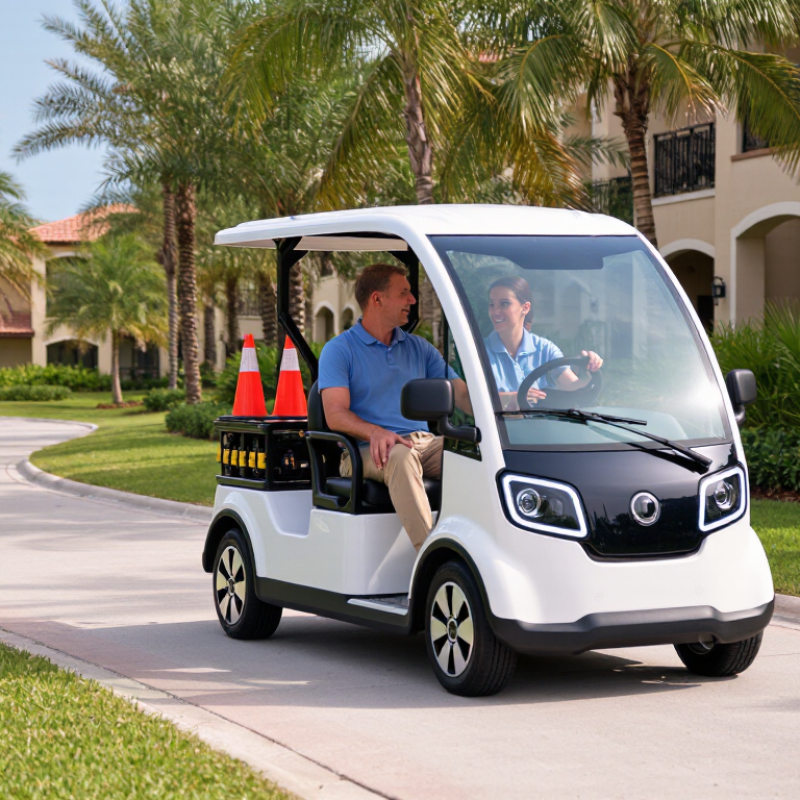
Why are electric golf carts becoming more popular in 2026? The answer is visible in ordinary places: a quiet cart crossing a resort path, carrying tools across a large property, or helping a community worker reach a distant building. Buyers increasingly value practical transport that is easy to operate, produces no tailpipe emissions while driving, and can suit short, frequent trips. The shift is not only about golf.

Mark Wagner, president of Club Car, is an established voice in the golf-car industry. A concise, verified quotation from him on this specific trend was not available for this introduction, so it would be misleading to invent one. His industry perspective can be fairly summarized this way: electric carts are expanding into uses beyond the golf course as customers seek versatile, everyday vehicles. That is a paraphrase, not a direct quote.

The appeal is tangible. Electric carts can move quietly along a resort lane, and charging overnight may fit a property’s daily routine. For fleet managers, operating costs, battery life, charging access, and maintenance still deserve careful comparison. Not every site is an easy fit. Range can vary with terrain, load, weather, and battery condition, so a glossy specification sheet is only part of the decision. There is a less polished side, too: charging takes planning, and replacing batteries can be expensive. This guide examines the main reasons behind the trend, the technology and ownership trade-offs, and the questions buyers should ask before choosing an electric golf cart in 2026.
Why Are Electric Golf Carts Becoming More Popular in 2026?

What Electric Golf Carts Are and How They Work

An electric golf cart is a compact vehicle powered by a rechargeable battery pack rather than a gasoline engine. It typically has a frame, seats, steering, brakes, and controls for speed and direction. Battery packs are often mounted beneath the seats or floor, keeping weight low and freeing space for passengers or golf bags.

Pressing the accelerator sends a signal to an electronic controller. The controller regulates electricity flowing from the battery to an electric motor, which turns the wheels through the drivetrain. Releasing the pedal reduces power, while the brake system slows the cart. The result is usually a quiet, gradual response, useful on paths where sudden acceleration would feel uncomfortable. The basic explanation leaves out some details.

Battery chemistry, voltage, and motor design vary between carts. Some models use lead-acid batteries; others use lithium-based packs. A built-in charger, or a compatible external charger, replenishes the pack from a standard power outlet.

Charging time depends on battery size, remaining charge, and charger output, so a quick glance at the display may not tell the whole story. In colder conditions, battery performance can change, and worn connections may affect operation. Regularly checking tire pressure, brakes, cables, and battery condition helps keep the cart working as intended.

How Battery Advances Are Improving Range and Charging

Electric carts are becoming more practical as batteries improve in usable capacity and charging flexibility. BloombergNEF’s 2024 Battery Price Survey reported a global average lithium-ion pack price of $115 per kilowatt-hour, down 20% from 2023. That figure covers many vehicle types, not golf carts specifically, but it signals broader progress in battery manufacturing. For cart owners, a well-matched lithium battery and battery-management system can help maintain steady power across a round, even on hills. The real-world range still depends on load, terrain, speed, and temperature.

Charging is improving, but it is not magic. A compatible charger can make a midday top-up more convenient, while actual charging time depends on battery capacity, charger output, and pack temperature. Check the cart’s manual before changing charger settings or battery chemistry. A promising range number on a product sheet may not match a hilly course with two passengers and a full bag.

Tips: Keep tires properly inflated and avoid carrying unnecessary weight. Charge with the manufacturer-approved equipment, and note how much range remains after a typical round. Small habits help; battery claims still deserve a closer look.

Why Are Electric Golf Carts Becoming More Popular in 2026? — How Battery Advances Are Improving Range and Charging

Factor Earlier Common Setup Battery Advances Practical Benefit What Buyers Should Check
Battery chemistry Flooded lead-acid batteries have long been used in golf carts. Lithium iron phosphate (LFP) batteries are increasingly available in newer electric carts. LFP packs are generally lighter and can provide more usable energy for a given pack size. Confirm the battery chemistry, usable capacity, warranty, and compatibility with the cart.
Usable battery capacity Lead-acid batteries are commonly discharged only partway to help preserve service life. LFP batteries can typically tolerate deeper discharge, subject to the battery maker’s limits. A greater share of stored energy may be available for driving between charges. Compare usable capacity, not just the battery’s nominal voltage or amp-hour rating.
Range per charge Range varies widely with battery capacity, terrain, speed, passenger load, and driving conditions. Higher usable capacity and more efficient battery systems can extend distance between charges. Fewer charging stops may be needed during a day of local travel or golf-course use. Ask for an estimated range under conditions similar to your intended use; published figures are not directly comparable.
Charging time Lead-acid charging can take several hours, and a full charge may take longer than a partial recharge. LFP batteries can often accept charge more quickly when paired with a compatible charger and battery-management system. Shorter charging windows can make routine or between-use charging more convenient. Check the specified full-charge time, charger output, outlet requirements, and whether charging is suitable for your schedule.
Cycle life and maintenance Flooded lead-acid batteries may require regular water-level checks and terminal care; service life depends on use and charging. LFP systems generally require less routine battery maintenance and are designed for many charge-discharge cycles. Lower day-to-day maintenance can make ownership simpler. Review warranty terms, recommended storage practices, and the battery maker’s cycle-life conditions.
Weight and vehicle load Lead-acid battery packs can add substantial weight to a cart. LFP packs are typically lighter than comparable lead-acid packs. Reduced battery weight may help with payload flexibility and vehicle efficiency. Check the cart’s payload rating and the installed pack’s total weight.
Battery monitoring State of charge may be harder to estimate accurately with basic meters, particularly under load. Battery-management systems can monitor conditions such as voltage, temperature, and charge state. Clearer battery information can help drivers plan charging and avoid unexpected low-charge situations. Ask what the display reports and whether the battery-management system provides protection against unsafe operating conditions.

Note: Performance and charging times depend on battery capacity, charger specifications, temperature, terrain, vehicle setup, and driving habits. Use the vehicle and battery manufacturer’s specifications for purchase decisions.

How Electric Carts Compare With Gas Models in Cost and Emissions

Electric carts often cost less to run, but the gap depends on local electricity prices, fuel use, and charging habits. The U.S. Energy Information Administration reported an average residential electricity price of 16.48 cents per kilowatt-hour in 2024. At that rate, a 5-kWh charge costs about 82 cents. Actual cart energy use varies with hills, passenger weight, and battery condition.

Emissions also depend on the comparison. EPA’s eGRID2022 data put average U.S. grid emissions near 0.82 pounds of carbon dioxide per kilowatt-hour. A 5-kWh charge therefore represents roughly 4.1 pounds of grid-related emissions. The U.S. Department of Energy’s Alternative Fuels Data Center lists gasoline combustion at about 8.9 kilograms of CO₂ per gallon; burning half a gallon produces about 4.4 kilograms at the tailpipe. These are illustrative figures, not a controlled test: one measures grid emissions, the other exhaust. Battery production and fuel refining are not included. The accounting is imperfect, but it shows why local power sources matter.

Tips: Check your utility bill and track actual charging for a week. Compare that with fuel purchased over similar rounds. Cold mornings and worn batteries can change the result.

Why Are Electric Golf Carts Becoming More Popular in 2026?

Estimated energy cost and operational CO₂ emissions per 100 miles: electric carts can cost less to run and produce lower use-phase emissions on the average U.S. electricity grid.

Estimates assume an electric cart uses 0.25 kWh per mile and a gas cart gets 20 miles per gallon. Energy prices use 2024 U.S. averages: $0.1648/kWh for residential electricity and $3.30/gallon for regular gasoline. Emissions use the EPA eGRID 2022 U.S. average electricity rate (823.1 lb CO₂/MWh) and the EPA gasoline tailpipe factor (8.887 kg CO₂/gallon). Gasoline production emissions, battery manufacturing, and charging losses are excluded; actual results vary by cart, location, and use.

Where Electric Golf Carts Are Used Beyond Golf Courses

Electric golf carts are finding work in resorts, campuses, and large residential communities, where many trips are short and repeat throughout the day. At a resort, staff might carry folded towels between buildings or move small supply loads along quiet paths. On a campus, maintenance crews can reach outdoor seating areas without bringing a full-size vehicle onto narrow walkways.

The appeal is practical. Electric motors produce no exhaust while driving, and their quieter operation can make busy shared spaces feel calmer.

Some parks use carts to move tools and collect waste across broad grounds. In retirement communities, they can help residents and staff travel between nearby facilities, provided routes are accessible and operating rules are clear. A cart may seem like an easy fix, but the details matter.

Operators need to consider passenger capacity, cargo weight, charging access, slopes, and pedestrian traffic. Rain and cold can also affect comfort and usable range. A vehicle that works well on a level resort path may be awkward on a steep service road. That gap is easy to overlook. Choosing a cart should start with the actual route and daily workload, not just the convenience of a short ride.

Which 2026 Trends Are Expanding Their Popularity

Electric golf carts are finding new roles in 2026, especially where short trips and low speeds make them practical. Resorts use them for guest transport, while campuses and planned communities consider them for routine errands. The appeal is often simple: a quiet ride, easy parking, and less effort than walking across a large site.

Battery improvements are part of the shift, but real-world performance still depends on terrain, passenger weight, weather, and charging access. Operators are paying closer attention to daily routes and downtime before choosing electric fleets. Small details matter. A cart that handles a flat course may feel less capable on steep paths or with a full load. Charging arrangements need thought, too.

Another trend is better integration with site operations. Some newer carts offer digital monitoring for battery status and maintenance needs, helping staff spot problems before a vehicle is unavailable. Accessibility options and practical storage can also make carts useful to more people. Not every upgrade is essential. Buyers should compare expected use, repair support, and total operating costs, rather than assuming newer technology always means a better fit.

FAQS

How does an electric golf cart move?

Its battery sends power through a controller to an electric motor. The motor turns the wheels. Releasing the accelerator reduces power.

Where are the batteries usually located?

They are often beneath the seats or floor. This keeps weight low and leaves room for passengers or golf bags.

How long does charging take?

It depends on battery size, remaining charge, and charger output. A display may not tell the whole story. Check actual charging times over several sessions.

What affects an electric cart’s performance?

Hills, passenger weight, weather, battery condition, and charging access all matter. Cold mornings can change performance. Worn connections can, too.

Are electric carts cheaper to operate than gas carts?

Often, but local electricity prices and fuel use affect the difference. At 16.48 cents per kilowatt-hour, a 5-kWh charge costs about 82 cents. Actual use varies.

Do electric carts always produce fewer emissions?

Not always. Grid emissions depend on the local power mix. One estimate puts a 5-kWh charge near 4.1 pounds of grid-related carbon dioxide. That figure excludes battery production and is not a complete comparison.

What maintenance should owners check?

Check tire pressure, brakes, cables, and battery condition regularly. Small checks help. Worn connections can affect operation.

Where are electric carts becoming useful in 2026?

Resorts, campuses, and planned communities consider them for short trips. Quiet travel and easy parking can help. Steep paths or full loads may challenge some carts.

What should buyers consider before choosing a newer cart?

Compare daily routes, charging access, repair support, and total operating costs. Digital monitoring, accessibility options, and storage may be useful. A newer model is not always a better fit.

Conclusion

Electric golf carts are small, battery-powered vehicles that use an electric motor to move people and equipment quietly and efficiently. Improvements in battery capacity and charging technology are helping many models travel farther and recharge more conveniently, making them practical for both short trips and longer daily use. Compared with gas-powered carts, electric models can have lower operating costs and produce no exhaust emissions while in use, though the best choice depends on how and where a cart will be driven.

So, why are electric golf carts becoming more popular in 2026? Their appeal is expanding beyond golf courses to communities, campuses, resorts, and other places where compact transportation is useful. Growing interest in quieter mobility, lower routine maintenance, and energy-efficient travel is also contributing to demand. As battery performance and charging access continue to improve, electric carts are becoming a flexible option for a wider range of settings.

Liam

Liam

Liam is a dedicated marketing professional with a profound expertise in the industry, where he excels at highlighting the unique advantages of our core products. With a keen understanding of market trends and consumer needs, Liam frequently updates our company’s professional blog, providing......