How to Choose Between Personal and Commercial Golf Carts?

Time:2026-09-20 Author:Mason
0%

Choosing the right vehicle begins with one practical question: who will use it, and how often?

The phrase how to choose between personal and commercial golf carts covers two very different buying decisions. A personal cart may carry two to six passengers across a neighborhood, farm, or private lane. A commercial cart may operate for eight hours, transport tools, and face constant stop-and-go traffic. Those environments demand different batteries, frames, tires, brakes, and service plans.

Market data shows why the choice deserves care. Grand View Research’s Golf Cart Market Size report valued the global market at approximately USD 1.75 billion in 2022. It also forecast continued growth through 2030, driven by resorts, communities, airports, campuses, and recreational use. Allied Market Research similarly identifies commercial fleets and utility applications as major growth segments. The numbers suggest opportunity, but they do not guarantee a suitable purchase.

Mark Wagner, former Club Car president and CEO, captured the industry’s wider shift: “The golf car is no longer just a golf car.” That observation matters. A personal model prioritizes comfort, quiet operation, appearance, and occasional charging. A commercial model prioritizes uptime, payload, safety equipment, weather protection, and accessible parts.

The answer is not always obvious. A shiny four-seater may struggle under daily cargo loads. A rugged fleet vehicle may feel excessive in a private driveway. Buyers should compare total cost, not only sticker price. Battery replacement, tires, charging infrastructure, insurance, and technician access can change the decision. Even experienced buyers sometimes underestimate terrain and duty cycles. That is where careful testing becomes essential.
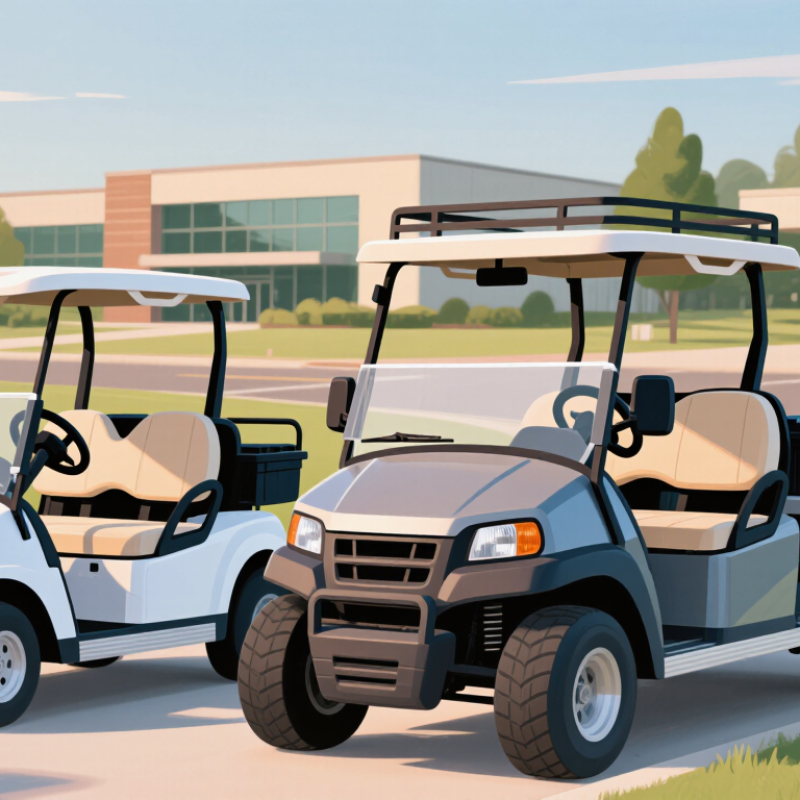
How to Choose Between Personal and Commercial Golf Carts?

Define Personal and Commercial Golf Carts

Personal and commercial golf carts may look similar, but their working demands are different. A personal golf cart is usually designed for private travel around a home, neighborhood, or recreational property. It often carries two to six passengers and light items, such as groceries, small tools, or beach chairs. Its owner may value quiet operation, comfort, simple controls, and low routine maintenance. The cart may travel short distances and rest for long periods.

A commercial golf cart serves repeated daily use in places such as resorts, campuses, farms, warehouses, and event grounds. Different operators may drive it every hour. It may carry passengers, equipment, or cargo across uneven surfaces. Stronger suspension, easier cleaning, reliable braking, protective features, and accessible service points become more important. A commercial model also needs a clear inspection routine. Check tire pressure, battery condition, steering response, brake performance, and visible frame damage before regular shifts.

The boundary is not always neat. A private owner who hauls heavy supplies every day may need commercial-level durability. A small business with light, occasional transport may not need the largest configuration. I have found that real usage matters more than appearance. Count daily trips, passenger weight, cargo weight, terrain, storage conditions, and charging access. Then compare those facts with the cart’s documented load limits and maintenance requirements. Guessing here can create avoidable wear. Some buyers focus too heavily on speed, while reliability usually decides whether the cart remains useful.

How to Choose Between Personal and Commercial Golf Carts?

Personal golf carts are generally designed for short-distance private transportation, while commercial golf carts prioritize passenger capacity, cargo handling, and frequent daily use. The comparison below shows common design ranges rather than brand-specific specifications.

Compare Usage, Passenger Capacity, and Travel Frequency

Choosing between a personal and commercial golf cart starts with how you will use it. A personal cart suits short trips around private property, neighborhoods, or small communities. It usually carries two to four people comfortably. Check the stated passenger capacity, not just the number of seats. Children, coolers, tools, and groceries add weight quickly. That detail is easy to miss.

A commercial cart makes more sense when passengers change throughout the day. Hotels, campuses, event sites, and large properties may need four, six, or more seats. Frequent loading also demands strong flooring, easy-clean surfaces, and dependable brakes. Ask how many trips it can handle before charging or refueling. A cart used ten times daily faces different wear than one used on weekends. In practice, tire pressure, battery condition, and brake response often matter more than polished appearance. I have found that a simple inspection log reveals problems earlier than a sales promise.

Travel frequency should guide the budget. Occasional users can accept slower charging and fewer convenience features. Daily users need predictable range, quick access, and scheduled maintenance. Think about peak moments, too. A two-seat cart may work on quiet mornings but fail during guest arrivals. Capacity ratings are not suggestions. Overloading can reduce control and increase stopping distance. I would also question my first estimate: planned trips often grow after purchase. Choose based on your busiest normal day, not an ideal day.

Assess Power, Range, Terrain, and Operating Conditions

How to Choose Between Personal and Commercial Golf Carts?

Power and range should match the work, not the parking space. The U.S. Department of Energy’s Alternative Fuels Data Center warns that speed, payload, temperature, and terrain can change electric-vehicle range. A cart carrying two people on level pavement needs less power than one hauling tools up a wet slope. For personal use, a moderate motor and standard battery may be sufficient. Commercial operators often need stronger acceleration, heavier-duty suspension, and dependable braking under repeated loads. More power is not automatically better.

Range estimates deserve careful judgment. They are often tested on smooth, flat surfaces with light payloads. Real routes include grass, ramps, stops, and uneven paths. A 2024 report from the National Golf Foundation recorded about 531 million rounds played in the United States during 2023, showing why fleet planning must consider repeated daily use. One cart may complete a private trip easily but struggle through a full commercial shift. Leave reserve capacity. Five empty minutes can become an inconvenient delay.

Operating conditions also change the decision. Coastal air, rain, dust, and winter temperatures can increase maintenance demands. Check charging access, tire condition, turning space, and the steepest route before choosing. ANSI/ITSDF B56.8 provides safety guidance for personnel and utility transporters, but compliance does not replace practical inspection. I have found that route testing reveals more than specifications. Measure the actual slope, load, and daily distance. Then question the result.

Review Costs, Maintenance, Safety, and Legal Requirements

Choosing between a personal and commercial golf cart starts with total operating cost, not the purchase price. Personal use often means fewer hours, lighter loads, and simpler servicing. Commercial fleets face daily charging, tire wear, brake checks, and downtime. The U.S. Department of Energy estimates electric vehicles can reduce routine maintenance costs by roughly 50% compared with conventional vehicles. That benchmark helps, but golf-cart batteries remain a major expense. Battery life changes with climate, charging habits, and workload. A clean spreadsheet can still miss lost revenue from one unavailable cart.

Maintenance should match usage. Personal owners may inspect tire pressure, cables, lights, and batteries monthly. Commercial operators need documented inspections and trained staff. ANSI/ITSDF B56.8 provides safety guidance for personnel and burden carriers, including controls, braking, and stability. CPSC injury analyses have estimated about 15,000 golf-cart-related emergency injuries annually in the United States. Falls, collisions, and passenger ejections are recurring concerns. Seat belts help. They do not replace speed control or supervision.

Legal classification matters more than many buyers expect. Under NHTSA’s federal definition, a low-speed vehicle travels above 20 mph and up to 25 mph, with required equipment such as lamps, mirrors, and seat belts. Local laws determine registration, insurance, road access, and operator requirements. A standard golf cart may not qualify as a low-speed vehicle. Commercial sites should also review workplace rules, traffic plans, and employee training records. I would confirm every requirement with the local authority before delivery. Guessing here is cheaper only until the first incident.

Match the Cart Type to Your Property and Long-Term Needs

Choosing between a personal and commercial golf cart starts with your property, not the vehicle’s appearance. A private cart suits short trips around a home, farm, or gated community. It usually needs comfortable seating, modest storage, and simple charging access. Commercial models fit hotels, campuses, resorts, warehouses, and large estates. They often require stronger frames, higher daily capacity, and easier maintenance access.

Usage data can clarify the decision. The National Golf Foundation reported about 531 million rounds played in the United States during 2023. That figure reflects continued demand for small-vehicle transport across golf properties and related facilities. Grand View Research valued the global golf cart market at approximately 1.6 billion dollars in 2023. Its forecast also points to steady growth through the decade. These numbers are useful, but they do not replace a property inspection. Market estimates vary.

Measure slopes, travel distances, passenger loads, and storage space before purchasing. A personal cart may struggle when carrying tools across uneven ground every day. A commercial cart may feel excessive on a quiet residential property. It can also create unnecessary charging and maintenance costs. Think long term. A durable battery system, accessible service points, weather protection, and safe braking may matter more than extra speed. I have seen buyers focus on seating capacity and overlook turning space. That mistake becomes expensive later. Review local operating requirements as well, because property rules can differ widely.

How to Choose Between Personal and Commercial Golf Carts? - Match the Cart Type to Your Property and Long-Term Needs

A practical comparison of typical personal-use and commercial-use golf cart characteristics.

Decision Factor Personal Golf Cart Commercial Golf Cart Best Match for Your Property
Primary purpose Neighborhood transportation, recreation, short trips, and private-property use. Frequent passenger transport, maintenance work, deliveries, and organized site operations. Choose personal use for household mobility; choose commercial use for repeated daily operations.
Typical seating Commonly 2 to 6 seats, depending on the vehicle layout. Commonly 4 to 14 seats, with larger shuttle layouts available for managed facilities. Select based on the maximum number of passengers transported during the busiest period.
Cargo and utility capacity Usually includes a small rear platform, storage compartment, or optional utility accessories. Often configured with a larger cargo bed, enclosed storage, tool compartments, or specialized attachments. A commercial utility configuration is more suitable for grounds crews, resorts, campuses, and warehouses.
Operating frequency Generally used intermittently, often for a few short journeys per day. Designed for repeated trips, multiple drivers, and longer daily operating cycles. High-use properties should prioritize commercial-grade durability and service access.
Typical speed range Many low-speed models operate around 15 to 20 mph (24 to 32 km/h), subject to local rules. Many facility vehicles are set around 12 to 20 mph (19 to 32 km/h) to balance safety and productivity. Speed should match site limits, pedestrian traffic, terrain, and local vehicle regulations.
Power options Battery-electric models are common for quiet residential use; gasoline models are also available. Electric models suit indoor or low-noise sites, while gasoline models can support extended outdoor duty where permitted. Consider charging access, ventilation, fuel storage, noise limits, and expected operating hours.
Charging or refueling needs Often recharged overnight using a suitable dedicated electrical outlet. May require planned charging bays, spare batteries, faster charging equipment, or scheduled refueling. Commercial sites need a written energy plan to prevent vehicle downtime during peak operations.
Terrain capability Suitable for paved roads, maintained paths, driveways, and moderate slopes when properly equipped. Can be specified with stronger suspension, utility tires, increased ground clearance, or work-oriented gearing. Assess slope, surface condition, drainage, turning space, and the weight carried on each trip.
Safety equipment Basic restraints, lights, mirrors, brakes, and warning devices may be included or added as required. Often benefits from enhanced restraints, audible warnings, beacon lights, reverse alarms, and operator controls. Sites with pedestrians, visitors, or multiple operators should use a documented safety checklist.
Maintenance workload Lower service demand when lightly used, although tires, brakes, batteries, and steering still require inspection. Requires scheduled inspections, cleaning, tire checks, brake servicing, battery care, and operator reporting. Choose commercial equipment when preventive maintenance can be organized and recorded consistently.
Total cost considerations Usually lower upfront cost for basic configurations, but accessories and road-use equipment can increase the total. Higher purchase and setup costs are common because of heavier-duty components, accessories, and service requirements. Compare purchase price with energy, labor, maintenance, insurance, storage, and replacement costs.
Regulatory considerations Use on public roads may require registration, insurance, lighting, mirrors, seat belts, and other approved equipment. Commercial sites may also need operator training, traffic procedures, inspection records, and workplace risk controls. Verify local laws and property rules before purchasing or allowing public-road operation.
Recommended property type Private homes, residential communities, small farms, vacation properties, and low-traffic private grounds. Resorts, hotels, campuses, hospitals, airports, construction sites, warehouses, parks, and large event venues. Match the vehicle to passenger volume, cargo demands, route length, terrain, and daily utilization.
Practical selection rule: Choose a personal golf cart when convenience and occasional private-property travel are the main priorities. Choose a commercial golf cart when the vehicle will carry passengers or materials repeatedly, operate for long hours, or be shared by multiple users.

Note: Specifications, legal requirements, payload limits, speed limits, and operating permissions vary by vehicle configuration and location. Always check the applicable local regulations and the vehicle's rated capacity before use.

FAQS

How should I choose between a personal and commercial golf cart?

Match the cart to daily work, passenger loads, terrain, and operating hours. A quiet property may need only moderate power. Busy sites need stronger suspension, braking, and service access. More power is not always better.

How much motor power does my property require?

A level paved route with two passengers needs less power. Tool carts climbing wet slopes need more torque and controlled acceleration. Measure the steepest route first. Do not guess.

Can I trust the advertised driving range?

Treat range figures as optimistic estimates. They usually assume smooth surfaces, light loads, and mild temperatures. Grass, ramps, stops, and cold weather reduce usable range. Leave reserve capacity for delays.

What should commercial operators inspect before buying?

Check daily distance, passenger weight, tools, slopes, turning space, and charging access. Test the actual route with a realistic load. One cart may finish a private trip easily. A full shift is different.

What maintenance does a golf cart require?

Inspect tires, brakes, cables, lights, and batteries regularly. Commercial sites should document inspections and train responsible staff. Dust, rain, coastal air, and winter temperatures increase maintenance demands. Small neglect becomes downtime.

Are commercial carts always more economical?

Not necessarily. Commercial models may handle heavier work but cost more to charge and maintain. Personal carts often use fewer operating hours and lighter loads. Compare battery replacement, tires, service time, and unavailable-cart costs.

What safety features should I prioritize?

Reliable brakes, stable suspension, seat belts, lights, mirrors, and speed control matter. Seat belts help, but supervision remains essential. Avoid carrying loads beyond the rated capacity. A crowded seat is not a safe upgrade.

Do local laws affect golf cart selection?

Yes. Rules may cover registration, insurance, road access, equipment, and operator age. A cart traveling above certain speeds may require additional equipment. Confirm requirements with local authorities before delivery. Guessing can become expensive.

Conclusion

Choosing the right golf cart begins with understanding the difference between personal and commercial models. Personal golf carts are generally designed for private properties, short trips, and occasional passenger use, while commercial golf carts are built for frequent operation, larger passenger loads, and demanding environments such as resorts, campuses, or large facilities. When deciding how to choose between personal and commercial golf carts, consider how often the cart will be used, how many people or materials it must carry, and whether it will travel on flat paths, rough ground, slopes, or other challenging terrain.

Power, driving range, charging or fueling needs, and operating conditions should also guide your decision. Commercial models may offer greater durability and capacity, but they can involve higher purchase, maintenance, and operating costs. Personal models may be more practical for simpler needs and smaller properties. Finally, review safety features, storage requirements, maintenance access, and local operating rules. Matching the cart to your property, workload, budget, and expected years of use will help ensure a reliable and cost-effective choice.

Mason

Mason

Mason is a seasoned marketing professional with a deep expertise in the company's offerings and a passion for driving brand awareness. With a strong background in digital marketing strategies, he has an innate ability to connect with diverse audiences and effectively communicate product benefits.......