Are golf carts suitable for commercial use? The answer depends on the job, location, and operating conditions. A quiet electric cart moving supplies across a resort may be highly practical. The same vehicle may struggle on steep construction sites, public roads, or long delivery routes.
The U.S. Department of Energy’s Alternative Fuels Data Center explains that low-speed electric vehicles generally operate around 20–25 mph, while conventional golf carts often move more slowly. That difference matters when businesses plan deliveries, security patrols, warehouse transport, or campus maintenance. Allied Market Research valued the global golf cart market at approximately $1.5 billion in 2021 and projected it to reach about $2.4 billion by 2031. The report points to commercial facilities, tourism, and municipal operations as important growth areas. Market growth alone, however, does not prove operational suitability.
Fleet electrification specialist John Gartner offers a useful principle: “Match the vehicle to the duty cycle.” In practice, that means checking payload, daily mileage, charging time, tire performance, weather exposure, and service support. A cart carrying tools through a hotel corridor faces different demands from one carrying 800 pounds across a distribution yard. Small details matter.
Not every business needs a golf cart.
This guide presents seven practical tips for evaluating commercial use. It also considers safety procedures, battery upkeep, employee training, route planning, and total ownership costs. Some assumptions may need reconsideration. A lower purchase price can hide lost productivity, weak batteries, or unsuitable ground clearance. Reliable decisions require field testing, documented maintenance, and advice from qualified fleet professionals.
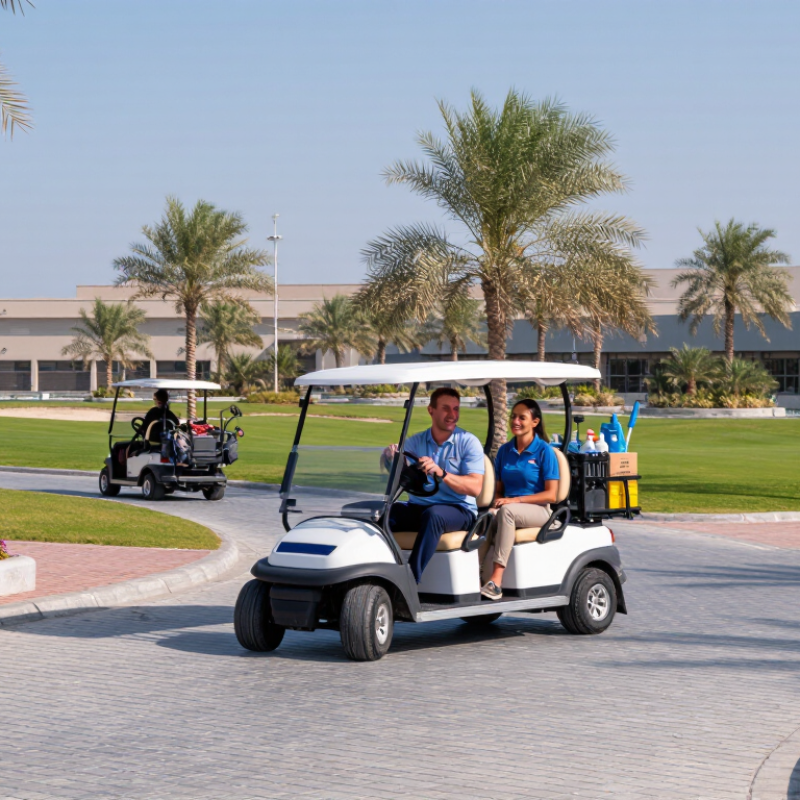
A golf cart becomes commercial equipment when a business uses it to serve customers, staff, or daily operations.
The label depends on purpose, not appearance. A cart carrying guests between hotel buildings is commercial. So is one moving tools across a resort, warehouse, campus, or event venue.
Seven practical questions can clarify the situation. Who operates the cart? Who benefits from its use? Does it carry passengers, supplies, or paid services? How often does it operate? Does it travel on private grounds or public roads? What safety features protect workers and visitors? Finally, can the business prove regular inspections and maintenance? These details matter more than color, size, or seating capacity.
Commercial carts often need stronger frames, better brakes, lighting, mirrors, warning devices, and weather protection.
Their tires may face uneven paths, ramps, gravel, and repeated loading. A maintenance log should record battery checks, brake tests, steering issues, and repairs. Operators also need practical training, especially near pedestrians and loading areas. Small oversights become expensive quickly. I have seen businesses focus on purchase price while ignoring charging space, storage, and downtime. That is a weak calculation. Local workplace and transport requirements can also differ, so owners should verify current rules with qualified safety professionals before regular operations begin.
Golf carts perform best in business settings where travel is frequent, distances are moderate, and traffic moves slowly. Campuses, resorts, warehouses, airports, farms, and large event venues often benefit from their compact size. Staff can carry tools, supplies, or guests between buildings without using a full-sized vehicle. They also fit narrow service roads and reduce walking time.
Look for seven practical advantages: passenger transport, quiet operation, low-speed control, easy parking, cargo flexibility, simple charging, and quick access. A cart with strong brakes and clear lights is essential on busy sites. Weather protection matters too. Rain can turn a pleasant ride into an uncomfortable one. Uneven paths may also require better suspension and safer tires. Route planning should separate carts from pedestrians whenever possible.
I once underestimated how quickly battery performance dropped during a cold morning shift. That small mistake delayed several deliveries. Regular inspections should cover tires, steering, brakes, charging points, and seat belts. Operators need clear training, even for short routes. Accessibility also deserves attention, since narrow seating may not suit every passenger. Carts are useful, but they are not universal replacements for vans or utility vehicles. Their value depends on suitable routes, realistic loads, reliable maintenance, and disciplined daily use.
| Tip | Commercial Setting | Suitability | Where Golf Carts Perform Best | Main Business Benefits | Key Limitations | Recommended Operating Practice |
|---|---|---|---|---|---|---|
| 1 | Guest and passenger transportation | Highly suitable | Resorts, campuses, outdoor venues, retirement communities, and large visitor facilities | Easy boarding, low operating noise, compact size, and convenient movement over short distances | Limited weather protection and passenger capacity compared with buses or vans | Use seat belts where fitted, define passenger limits, and keep routes on private or low-speed property roads |
| 2 | Maintenance and grounds operations | Highly suitable | Hotels, parks, sports facilities, warehouses, and property-management sites | Good maneuverability, low-speed control, and compatibility with utility beds or enclosed cargo areas | Payload and towing capacity are lower than those of many utility trucks | Confirm the rated payload and towing limits before carrying tools, materials, or trailers |
| 3 | Warehouse and facility logistics | Suitable with conditions | Large indoor or outdoor facilities with short, repeated transport routes | Can reduce walking time and move small loads between buildings or work zones | Not a substitute for forklifts, pallet trucks, or road-legal delivery vehicles | Separate pedestrian and vehicle paths, control intersections, and use cargo restraints |
| 4 | Security, patrol, and inspection work | Suitable with conditions | Campuses, gated communities, parking areas, event grounds, and industrial properties | Provides quick access, good visibility, and easier stopping than larger vehicles | Limited protection in severe weather and lower performance on steep or rough terrain | Equip the vehicle with lighting and communication tools appropriate for the site and work shift |
| 5 | Events, parking, and crowd assistance | Highly suitable | Exhibitions, festivals, fairs, athletic venues, and temporary event sites | Flexible routing, simple parking, and useful support for staff and visitors | Safety risks increase in crowded areas, especially where pedestrians and vehicles share space | Set low speed limits, use trained drivers, and establish designated loading and unloading points |
| 6 | Short-distance delivery and service calls | Suitable with conditions | Private business parks, campuses, farms, marinas, and local facility routes | Lower noise, simple access, and useful cargo flexibility for light-duty trips | Typical operating speeds of about 15–25 mph and limited range make long routes inefficient | Plan routes around charging or refueling access and verify whether public-road use is legally permitted |
| 7 | Purchase, operating cost, and maintenance planning | Suitable when matched to the task | Businesses with predictable routes, moderate loads, and access to private charging areas | Electric models can offer quiet operation and fewer routine engine-service requirements | Battery replacement, charging downtime, weather exposure, and limited range affect total cost | Compare route distance, load, terrain, charging time, insurance, training, and local regulations before purchase |
Note: Performance figures and operating suitability vary by vehicle configuration, battery condition, terrain, weather, passenger load, and local regulations.
Golf carts can improve commercial operations when routes are short, controlled, and repetitive. Their compact frames move through warehouses, resorts, campuses, farms, and large facilities with less congestion. Tip one: measure route length before purchasing. A cart that needs constant charging becomes an operational delay. The U.S. Department of Energy reports that electric vehicles convert over 77% of grid energy into motion, compared with roughly 12–30% for gasoline vehicles.
Tip two is lower operating cost. Electric carts usually need fewer engine-related services, fluids, and replacement parts. Tip three is maneuverability. A tight turning radius helps staff carry tools through narrow service lanes.
Tip four is quiet operation. Workers can communicate beside the vehicle, while guests experience less disturbance. This matters during early deliveries and nighttime maintenance.
Allied Market Research estimates that the global electric golf cart market could reach approximately 2.8 billion dollars by 2031, showing growing commercial interest.
Tip five is flexible cargo capacity. Add a flatbed, rear seat, or enclosed box for specific tasks. Tip six is reduced local exhaust emissions, especially indoors or near public areas.
Tip seven is safety planning. Operators need speed limits, pedestrian rules, charging procedures, and scheduled inspections. The U.S. Occupational Safety and Health Administration emphasizes training and workplace vehicle controls, although golf carts are not automatically safe. Battery weight, wet floors, blind corners, and poor visibility still create risks.
The case is strong, but not automatic.
A pilot route may reveal problems that a brochure misses.
Are Golf Carts Suitable for Commercial Use?
Golf carts can support short-distance transport on private commercial sites, but their limits appear quickly. Tip one: map every route before purchase. Uneven ground, steep ramps, rainwater, and narrow service lanes can create daily hazards. Tip two: match the cart to its load. Passengers, tools, and materials may exceed safe capacity. A small mistake matters.
Tip three: control speed near doors, crossings, and blind corners. A speed limiter helps, but it cannot replace trained operators. Tip four: separate pedestrians from vehicle routes where possible. Marked walkways, mirrors, warning lights, and working brakes reduce collision risks. Seat belts should be used whenever fitted. This is easy to neglect. Tip five: inspect tires, steering, lights, brakes, and batteries before each shift. Keep charging areas dry, ventilated, and free from stored materials.
Tip six: train operators on reversing, passenger limits, parking, and emergency reporting. Written records make training more reliable. Tip seven: verify local legal requirements before commercial operation. Rules may cover road access, registration, insurance, speed limits, lighting, accessibility, and workplace safety. Requirements can differ between a private resort, warehouse, and public roadway. A cart approved for one site may be unsuitable elsewhere. That assumption deserves review. The safest decision comes from a documented risk assessment, not a quick test drive.
Practical Limitations, Safety Risks, and Legal Requirements
In the United States, a conventional golf cart is legally distinguished from a low-speed vehicle (LSV) by its speed capability. Federal definitions place golf carts at a maximum attainable speed of 15 mph, while LSVs are designed for speeds above 20 mph and up to 25 mph. Commercial operators using public roads may therefore need an LSV-compliant vehicle, road approval, safety equipment, insurance, and local authorization.
Source: U.S. Code of Federal Regulations, 49 CFR §571.3 and 49 CFR §571.500. State and local roadway rules may impose additional requirements.
Choose carts around the job, not around appearance. Measure routes, slopes, doorways, and average passenger loads. A warehouse may need a cargo bed, while a resort may need quiet seating. Check battery range during the busiest shift. A cart that stops before lunch is not practical. Confirm charging locations, ventilation, and electrical capacity with a qualified technician. Keep charging areas dry, visible, and free from stored materials.
Train every driver before assigning daily work. Cover braking, turning, pedestrian awareness, and safe loading. Set a realistic speed limit for narrow paths. Use seat belts where fitted. Schedule inspections for tires, steering, brakes, lights, and batteries. Record faults immediately, even when the cart still moves. Small problems become expensive surprises. Keep service records with operating hours and repair dates. This supports dependable fleet decisions.
Match each cart to a clear business task. Separate passenger use from heavy transport when possible. Mark pedestrian crossings and blind corners with signs. Review traffic patterns after rain, deliveries, or seasonal changes. Our first route plan looked efficient, but workers repeatedly reversed near a loading door. We changed the layout after observing the problem. That adjustment mattered more than our original spreadsheet. Reassess insurance, local requirements, and workplace procedures with qualified professionals. Cost control matters, but downtime and preventable injuries cost more.
They work well on campuses, resorts, farms, warehouses, airports, and event grounds. Short routes help. Slow traffic and moderate distances are ideal.
They can move staff, guests, tools, supplies, and small loads between nearby buildings. A flatbed suits equipment. An enclosed box protects supplies from rain.
Measure route length, slopes, doorways, passenger numbers, and typical cargo weight. Choose for the job, not appearance. A warehouse may need cargo space, while a resort may need quiet seating.
Check battery range during the busiest work shift. Charging points need dry, visible, and ventilated locations. A cart stopping before lunch is not practical. Cold mornings can reduce battery performance more than expected.
Electric carts may require fewer fluids, engine services, and replacement parts. They can also reduce fuel use on short routes. Actual savings depend on charging, maintenance, loads, and downtime.
Train every driver on braking, turning, loading, and pedestrian awareness. Set low speed limits near doors and crowded paths. Inspect tires, steering, brakes, lights, batteries, and seat belts regularly. Small faults matter.
Mark crossings and blind corners clearly. Separate cart routes from walking paths whenever possible. Use signs near loading doors and narrow service lanes. Review traffic after rain or major deliveries.
Not always. They suit short, controlled routes and realistic loads. They may struggle with steep slopes, heavy cargo, long distances, or severe weather. A small pilot route can expose problems before wider use.
Check seat width, step height, handholds, and passenger stability. Narrow seating may not suit every rider. Weather covers can improve comfort during rain. The original layout may look efficient, but real users can reveal flaws.
Are golf carts suitable for commercial use? In many business environments, the answer is yes, especially when they are used for short-distance transportation, routine deliveries, facility maintenance, or moving staff and equipment across large properties. They perform particularly well in resorts, campuses, warehouses, farms, event venues, and industrial sites where low speed, compact size, quiet operation, and easy maneuverability are valuable. Their lower operating and maintenance costs can also make them an efficient alternative to larger vehicles for specific daily tasks.
However, businesses should consider practical limitations, including restricted carrying capacity, limited travel range, weather exposure, charging needs, and reduced performance on steep or uneven ground. Safety procedures, operator training, passenger limits, protective equipment, designated routes, and local registration or workplace requirements should be addressed before use. Choosing the right vehicle configuration, scheduling regular inspections, managing batteries responsibly, and keeping clear usage records can improve reliability. With proper planning and responsible management, golf carts can support commercial operations efficiently while maintaining safety and regulatory awareness.

Shiry Golf